Pain Management
Our practice combines evidence-based medicine with advanced neuromodulation-based techniques such as Occipital Nerve Stimulation (ONS) and Vagus Nerve Stimulation (VNS), together with Traditional Chinese Medicine (TCM) principles that guide our holistic treatment philosophy.
To date, this integrated approach has benefited many patients presenting with various pain conditions, including headaches, neck and shoulder pain, elbow pain, lower back pain, and knee pain.
Headache (e.g. Migraine, Tension-type headache, Cervicogenic Headache)
Headache is one of the most commonly encountered conditions and is broadly classified into primary and secondary headaches. Primary headaches include migraine, tension-type headache, and cluster headache. Migraine typically presents as a unilateral, throbbing pain and may be associated with nausea, vomiting, photophobia (sensitivity to light), phonophobia (sensitivity to sound), and sometimes visual or sensory auras. Tension-type headache is usually bilateral, with a dull, pressing or tightening sensation, and is often linked to stress or prolonged muscle tension. Cluster headache, though less common, presents as severe unilateral pain, often around the eye or temple, and may be accompanied by tearing or nasal congestion.
Secondary headaches arise from underlying medical conditions such as infections, vascular disorders, medication overuse, or increased intracranial pressure and cervical spondylosis.
Acupuncture has demonstrated substantial evidence for the management of headaches, particularly tension-type headaches and migraines, as shown in multiple systematic reviews [1]. In a randomised controlled trial published in JAMA Internal Medicine, acupuncture was shown to significantly reduce the frequency of migraine attacks [2]. Furthermore, the application of electrical stimulation through acupuncture needles allows it to function as a form of neuromodulation, similar to occipital nerve stimulation (ONS). In this technique, the occipital nerves located at the back of the head are targeted to modulate pain pathways. ONS has also been recognised in international guidelines, including the British NICE guidelines, for the management of chronic migraine.

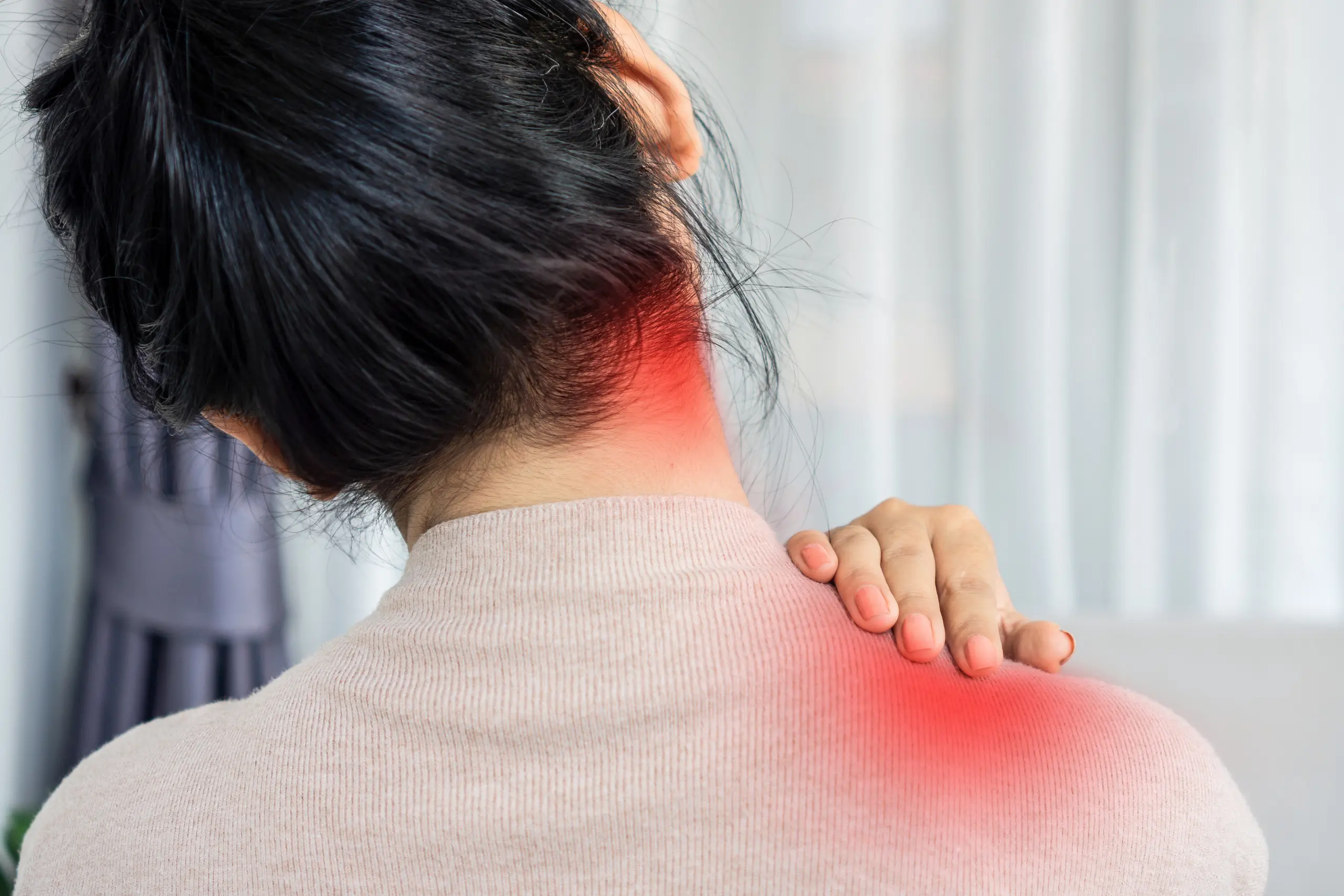
Neck and Shoulder Pain (e.g. Cervical Spondylosis, Frozen Shoulder)
Neck and shoulder pain commonly arises from disorders affecting the muscles, tendons, ligaments, and joints in this region. The most frequent causes include cervical spondylosis, rotator cuff injuries, shoulder impingement, adhesive capsulitis (frozen shoulder), osteoarthritis, shoulder instability, and cervical radiculopathy (nerve pain originating from the neck). These conditions may result from repetitive overuse, poor posture, ageing-related degeneration, overhead activities, or traumatic injuries such as falls.
Pain in these conditions is largely due to inflammation, mechanical irritation, or degenerative changes. Rotator cuff injuries occur when the tendons become irritated, weakened, or torn. Shoulder impingement develops when the tendons and bursa (a fluid-filled sac) are compressed during arm elevation, leading to inflammation. Frozen shoulder occurs when the joint capsule becomes thickened, inflamed, and contracted, resulting in significant stiffness and restricted movement.
Arthritis causes pain due to the gradual breakdown of cartilage, leading to increased friction and joint inflammation. Shoulder instability results from ligamentous laxity or previous dislocations, causing abnormal joint movement and discomfort. In some cases, a compressed nerve in the cervical spine may radiate pain into the shoulder and arm. Overall, neck and shoulder pain typically arise from inflamed, degenerated, compressed, or restricted tissues within the region.
Management depends on the underlying cause and often includes acupuncture, sports massage therapy, cupping, and appropriate medications. These therapies aim to reduce inflammation, improve circulation, relieve muscle tension, and restore range of motion and function.
Lower Back Pain (e.g. Slipped Disc, Sciatica, Spinal Stenosis)
Lower back pain is frequently caused by abnormalities in the muscles, intervertebral discs, facet joints, ligaments, or nerves of the lumbar spine. Common associated conditions include muscle strain, degenerative disc disease, facet joint osteoarthritis, herniated (slipped) discs, spinal stenosis, and sacroiliac (SI) joint dysfunction. Muscle strain often results from heavy lifting or sudden awkward movements, while degenerative changes are commonly associated with ageing.
These conditions cause pain through inflammation, mechanical stress, or compression of neural structures. As intervertebral discs degenerate, they lose their height and cushioning ability, increasing the mechanical load on surrounding joints. A herniated disc occurs when the soft inner portion of the disc protrudes outward, compressing a nearby nerve root and resulting in sciatic pain that radiates down the leg. Facet joint arthritis develops when the small interlocking joints of the spine become worn, stiff, and inflamed.
Spinal stenosis, the narrowing of the spinal canal, results in compression of the spinal nerves, especially during standing or walking, leading to back and leg pain. Similarly, SI joint dysfunction causes pain due to instability or inflammation at the junction between the spine and pelvis. Across these conditions, the common pathway is strain, degeneration, inflammation, or compression, which triggers persistent pain and restricts movement.
A recent study published in JAMA Network demonstrated that acupuncture significantly reduces chronic lower back pain in older adults [3], reinforcing findings from earlier trials [4]. Additionally, the use of electrical stimulation in acupuncture enables it to function in a manner similar to Spinal Cord Stimulation (SCS). In this process, nearby neural structures such as the dorsal root ganglion (DRG) and dorsal horn are modulated. The stimulation can be delivered as tonic stimulation (TS)—with continuous impulses—or burst stimulation (BS)—with intermittent pulses followed by periods of rest [5]. Compared to surgically implanted SCS devices, this approach is less invasive and avoids complications such as device migration, infection, and MRI incompatibility.
In addition, cupping therapy and therapeutic massage are incorporated in management. A systematic review has shown that cupping therapy offers superior and sustained pain reduction when compared to standard medication and usual care [6].
Knee Pain (e.g. Knee Osteoarthritis, Meniscus Tear, Ligament Sprain)
Knee pain is commonly seen in conditions such as meniscus tears, ligament sprains (e.g. ACL and MCL), patellar or quadriceps tendinitis, patellofemoral pain syndrome, and, especially in elderly populations, knee osteoarthritis.
In all of these conditions, stress or injury to the supporting structures of the knee leads to inflammation, swelling, joint instability, and pain, particularly during weight-bearing activities such as walking, climbing stairs, squatting, or kneeling.
Management of knee pain focuses on reducing inflammation and swelling, while simultaneously controlling pain and improving function. Topical preparations and compression bandaging are used to reduce joint stress and enhance stability during movement. These measures are combined with acupuncture and appropriate medications to further alleviate pain, improve circulation, and support joint recovery.
Commonly encountered conditions
At LH Wong Integrative Clinic, we go beyond traditional acupuncture methods when treating Pain disorders.
Commonly encountered conditions include:
- Headache:
- Migraine,
- Tension Headache,
- Cluster Headache,
- Cervicogenic Headache,
- Medication overused Headache,
- Neck and shoulder pain:
- Cervical spondylosis,
- Cervical spondylolisthesis,
- Neck Sprain/Strain,
- Cervical stenosis,
- Frozen shoulder
- Lower back pain:
- Muscle strain,
- Sciatica,
- Degenerative disc disease,
- Facet joint Osteoarthritis,
- Herniated (slipped) discs,
- Spinal stenosis,
- Sacroiliac (SI) joint dysfunction
- Knee pain:
- Knee Osteoarthritis,
- Ligament Sprain,
- Ligament tear,
- Meniscus tear,
- Tendonitis
References
1. Linde K, Allais G, Brinkhaus B, Fei Y, Mehring M, Shin BC, Vickers A, White AR. Acupuncture for the prevention of tension‐type headache. Cochrane Database of Systematic Reviews 2016, Issue 4. Art. No.: CD007587. DOI: 10.1002/14651858.CD007587.pub2. Accessed 20 November 2025.
2. Zhao L, Chen J, Li Y, et al. The Long-term Effect of Acupuncture for Migraine Prophylaxis: A Randomized Clinical Trial. JAMA Intern Med. 2017;177(4):508–515. doi:10.1001/jamainternmed.2016.9378
3. DeBar LL, Wellman RD, Justice M, et al. Acupuncture for Chronic Low Back Pain in Older Adults: A Randomized Clinical Trial. JAMA Netw Open. 2025;8(9):e2531348. doi:10.1001/jamanetworkopen.2025.31348
4. Brinkhaus B, Witt CM, Jena S, et al. Acupuncture in Patients With Chronic Low Back Pain: A Randomized Controlled Trial. Arch Intern Med. 2006;166(4):450–457. doi:10.1001/archinte.166.4.450
5. Huygen FJPM, Soulanis K, Rtveladze K, Kamra S, Schlueter M. Spinal Cord Stimulation vs Medical Management for Chronic Back and Leg Pain: A Systematic Review and Network Meta-Analysis. JAMA Netw Open. 2024;7(11):e2444608. doi:10.1001/jamanetworkopen.2024.44608
6. Zhang Z, Pasapula M, Wang Z, Edwards K, Norrish A. The effectiveness of cupping therapy on low back pain: A systematic review and meta-analysis of randomized control trials. Complement Ther Med. 2024 Mar;80:103013. doi: 10.1016/j.ctim.2024.103013. Epub 2024 Jan 5. PMID: 38184285.
Bringing you the best of both worlds